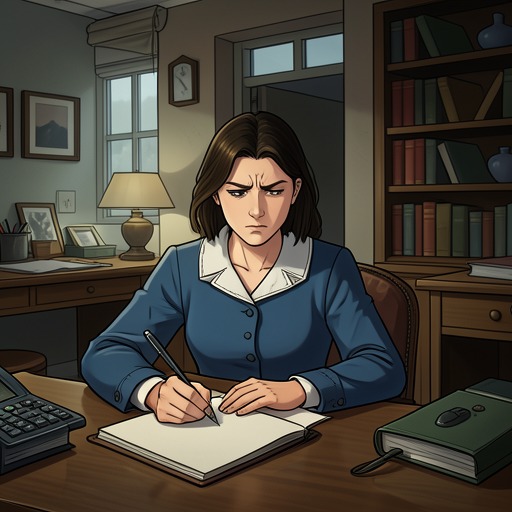
Jo sells her hair to help her father
Little WomenJo sells her hair to help her father is one of the clearest demonstrations of Jo’s courage, resourcefulness, and devotion in Little Women. When a telegram reports that Mr. March is very ill at Blank Hospital in Washington, the March household is abruptly transformed from anxious waiting into urgent preparation. Jo responds not with passive grief but with practical action: she finds a way to raise money, gives up her abundant hair, and returns with twenty-five dollars to help make her father comfortable and bring him home.
The Wartime Crisis
The sacrifice begins with the family’s separation from Mr. March. The girls already understand that the war has taken their father far away, and Jo has admired his decision to serve as a chaplain even though he was too old to be drafted and not strong enough to be a soldier. The telegram therefore turns a prolonged absence into an immediate medical emergency. Hannah brings the alarming message, and Mrs. March reads that her husband is very ill and that she must come at once. The brief notice leaves no room for preparation or reassurance; Mrs. March collapses into shock while the daughters and Laurie immediately organize the journey.
The need is both emotional and material. Mrs. March must travel a long distance to Washington, and the household must gather clothing, nursing supplies, food, and other comforts for an invalid whose hospital care may not provide everything required. Jo tears the blank side from one of her newly copied pages and uses it to write a table of what is needed, already understanding that money for the journey must be borrowed. Her gesture makes writing paper, usually connected with her literary ambitions, part of the family’s emergency economy: imagination and labor are redirected toward care.
Jo’s Decision and the Sale
Jo is dissatisfied with borrowing and feels that she must contribute more directly. Meg has already given her quarterly salary toward the rent, while Jo has received only clothing from her own earnings. She therefore resolves to obtain money by whatever means remain available, even imagining that she would sell anything of her own if necessary. In the barber’s window she notices prepared tails of hair with prices attached; one black tail, less thick than hers, is marked at forty dollars. The sight produces the practical solution that the crisis demands.
Jo enters the barber’s shop without hesitation and asks whether her hair can be bought and what it will bring. The barber initially objects that her hair is not the fashionable color and would not ordinarily command much money. Jo is pressed by time and by her determination to complete whatever she begins. She explains why she needs the money, and the barber’s wife persuades him to accept the hair, saying that she would do as much for her own child if she possessed a lock worth selling. The sale yields twenty-five dollars, a substantial contribution that Jo can place immediately in her mother’s hands.
The action is physically visible when Jo removes her bonnet and the family discovers that her long hair has been cut short. The sudden transformation provokes a general outcry because her hair has been regarded as her one great beauty. Jo tries to dismiss the loss, claiming that it will humble her vanity, lighten her head, and be easier to keep in order. Her joking indifference cannot conceal the cost of the decision, but it prevents the family from treating her as helpless or pitiable. She insists that the money should be accepted and that the household should proceed with supper.
Sacrifice and Family Economy
Jo’s contribution does not stand alone. The March sisters are already practicing economic independence because Mr. March lost his property while trying to help an unfortunate friend. Margaret March works as a nursery governess and suffers especially from poverty because she remembers the family’s former comfort; Josephine March works for Aunt March; and both older girls have been encouraged to cultivate energy, industry, and independence rather than wait for rescue. Jo’s hair sale intensifies this pattern by turning her body and appearance into a temporary financial resource.
The act also clarifies the family’s values. The Marches refuse to surrender their daughters for the sake of Aunt March’s fortune, declaring that they will remain together and be happy in one another whether rich or poor. Their poverty is real, but so is their refusal to measure family duty by inheritance or social advantage. Jo’s twenty-five dollars gives that principle a dramatic form. She does not purchase comfort for herself; she converts a prized possession into care for Mr. March and relief for Mrs. March, accepting a visible alteration in her appearance because the family’s immediate need matters more.
Jo’s sacrifice further develops the connection between feminine labor and dignity. Earlier, when Margaret March frankly says that she is a governess, Miss Kate’s condescending tone makes her blush, but John Brooke defends the independence of American young women who support themselves. Jo’s action makes that independence concrete. It is not merely an ideal or a verbal defense: it involves earning money, judging a market, negotiating with a tradesman, and accepting the social and personal consequences of a sale. The same determination later appears in Jo’s literary work, when her stories begin to be printed and she hopes that writing may eventually support herself and help the girls.
Aftermath and Meaning
The immediate consequence is that Jo can help fund Mr. March’s care and his return, while Mrs. March can leave with supplies and with the knowledge that her daughters are actively sustaining the household. The sale does not remove the danger, and the family’s distress remains acute. Yet it changes Jo’s position within the crisis: she is no longer only the daughter who fears for an absent father; she becomes one of the people materially carrying him through illness.
The scene’s emotional force comes from the contrast between Jo’s comic performance and the seriousness of what she has surrendered. She jokes about her shortened hair and asks everyone to stop lamenting it, but the family sees that the gesture required genuine courage. The cropped head becomes an outward sign of inward reordering. Beauty, vanity, and personal possession are placed below filial responsibility, not because Jo has ceased to value them, but because love has given them a different price.
Mrs. March’s counsel before departure places Jo’s action within a larger ethic rather than treating it as an isolated heroic impulse. She tells the girls to continue their work, to hope, and to keep busy, reminding them that they will never be fatherless. Jo’s sale embodies that instruction in its most urgent form: work and sacrifice become ways of resisting helplessness. Her independence is therefore not separation from the family. It is the means by which she remains faithful to it.
Jo’s Larger Development
Jo’s hair-cutting sacrifice anticipates the adult direction of her life. She wants to write, earn praise from those she loves, and eventually support herself and help her sisters. Later she seeks honest work in New York as a governess and seamstress, refusing to be ashamed of service, and ultimately imagines opening a happy, homelike school for boys with Friedrich Bhaer teaching alongside her. Across these choices, usefulness repeatedly tempers ambition. Jo’s dreams are not abandoned, but they are tested by concrete obligations.
For that reason, Jo sells her hair to help her father is more than a memorable family episode. It is a turning point in which wartime separation, economic hardship, female labor, bodily sacrifice, and family solidarity converge. The action reveals Jo’s characteristic method of meeting suffering: she feels fiercely, acts quickly, and transforms whatever resource she possesses into practical help. The lost hair grows again, but the decision permanently establishes the moral shape of her independence—energetic, self-directed, and grounded in love.